
Your journey to healing
begins here
With over 30 years of experience treating adults, adolescents and couples I have learned to tailor-design the correct combination of treatment approaches to create the most effective path toward reaching your goals. I specialize in EMDR Therapy. Above all, therapy happens in a space of deep compassion—where you feel safe, supported and free from judgment.
Let’s take the next step together.
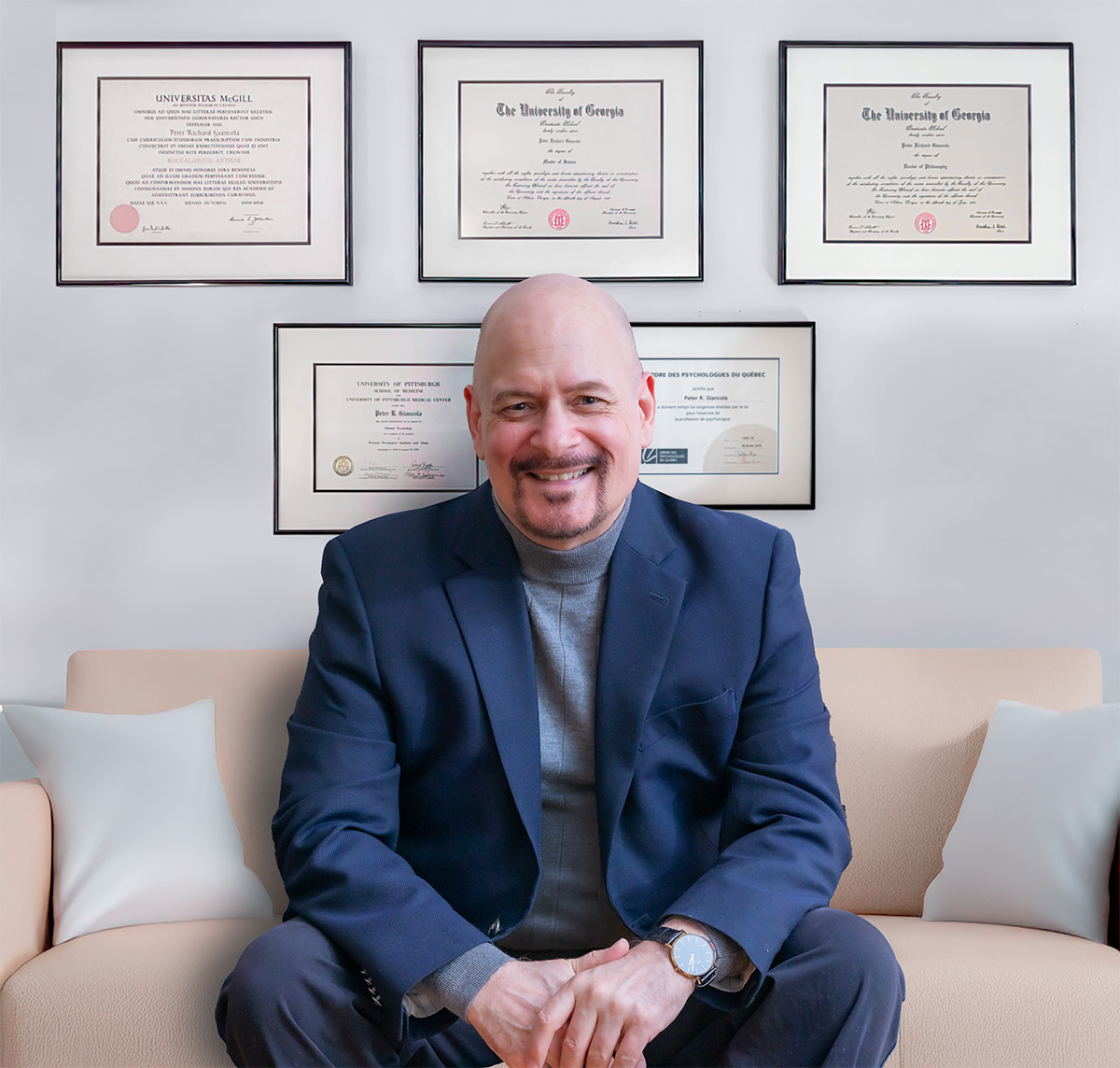
Dr. Peter R. Giancola, Ph.D.
I’m a licensed clinical psychologist and have been practicing since 20??. Previously I was a professor of clinical psychology at 2 major US universities where I lead a 15-year research program investigating the root causes and best treatments for many mental illnesses. Although the roots of my knowledge comes from my academic work, I’ve also lived a lifetime of hard experiences that have given me a profound understanding of the suffering and tragedy that people experience on a daily basis.
By carefully listening to you, I’ll gain a deeper sense of what you’re experiencing so that you won’t feel so alone. By healing your past psychological wounds, you’ll feel “lighter” and be able to move forward with your life in a healthy and more productive manner. Together, we’ll work on practical, long-lasting solutions that will help you reclaim your peace and foster deeper and more meaningful relationships.
This is compassionate care tailored to you.
Testimonials
Special thanks to the patients who went out of their way to post comments about their experience. It is very much appreciated. – Dr. Peter 🙂



Mackenzie Gauthier
Peter is knowledgeable, patient, kind and always has his patients best interests at heart. You can tell that he truly cares about his patients and wants them to get better from the moment you meet him. I have been seeing him for a while now and with his guidance and his incredible knowledge and understanding of the mind, I have learned so much about myself and my illness. Thanks to his help and continuing support, I find myself getting better and better everyday. Thank you Peter.


Olivia Rinaldi
Dr.Peter is as sweet and caring as they come. It feels as though we have known each other for years even though he’s only been my therapist for a few months. You can always tell how much he cares about you during every session. 10/10 recommend !!!
Jiayi Wang
I’ve been having virtual appointments with Dr Peter on a weekly basis for a few months, and I’m very happy with the results already! Dr Peter is very compassionate and geniunely cares about his clients. I really like that he is skilled in many different treatment methods, so I could choose the approaches that appealed to me. It’s also so easy to set up appointments as he always responds promptly. Thank you Dr Peter!
Dina Russo
Dr. Peter is very kind and compassionate. From the first day speaking to him I felt like I knew him for years. He is extremely attentive and concerned for his patience not only during the session but all the time . He has helped myself and my children immensely. I will be forever grateful to him.
Ankitha Merugu
Dr. Peter is compassionate professional. He is very patient to listen and help me understand the process of trauma therapy. He responds quickly whenever I needed for questions or for appointments.
Nour Younes
Dr. Giancola really helps me navigate through life. As this journey can get difficult at times, we all need a caring, heartwarming, compassionate individual to understand us so that we can better understand ourselves. Dr. Peter not only makes you realize that it is ok to ask for help, but he hands it to you with an open heart. You can really tell that he loves being a therapist and that he wants you to get better.
I strongly recommend you seeking his expertise if you are looking for one!
Thank you Dr.
Alfie Diliberto
I’ve been seeing Peter weekly for over six months. He is always there and always accommodating with my schedule. He has been an incredible help. He is compassionate and caring and has guided me in my difficult time. I am so happy to have found him.
Jenn A
Dr. Peter is truly one of a kind. He’s incredibly experienced given his education and research knowledge, professional, funny, and his kind, understanding nature makes each interaction feel tailored. I also really appreciate his ability to personalize treatment to what feels most comfortable and effective for me; he genuinely cares about helping his patients thrive. He goes above and beyond especially when it comes to out-of-session check-ins during emergencies.
My Therapeutic Approach
Your journey is unique and your therapy should be too. I take a highly personalized and integrative approach tailoring each session to your specific needs. Whether using a single method or blending multiple treatment options (see below), my focus is on creating the most effective path to your healing and personal growth.
The Therapy Process
During our first session, I’ll conduct a thorough evaluation of what’s brought you into therapy. In other words, what are your current struggles and what’s not working in your life right now? Are you anxious, depressed, struggling in a relationship, troubles at work, drinking too much, etc.?
Then, we’ll delve deeply into your developmental history right from the beginning. Together, we’ll identify all of the negative moments/events from your past that have now brought you to where you are now. I call this process “connecting the dots” and it’s where we’ll figure out the root causes of your current difficulties.
You’ll then tell me your goals and what you want to get out of therapy; and I’ll propose some treatment options. Once we agree upon the best treatment interventions for you, we’ll begin at a comfortable pace always prioritizing doing our work in a compassionate atmosphere that makes you feel safe, secure and supported as well as free from any judgement.
My Approaches
Trauma-Informed Therapy
This approach recognizes the impact of past traumas on your current mental health and focuses on healing, creating safety, rebuilding trust and self-empowerment. (click and see if “little t” traumas applies to you*)
Eye Movement Desensitization and Reprocessing (EMDR)
EMDR is a powerful tool for reprocessing traumatic memories, reducing emotional distress and helping you to move forward when the passage of time alone is not enough.
Cognitive Behavioural Therapy (CBT)
CBT helps you to identify and change unhelpful thought patterns and behaviors that contribute to distress. It is highly effective for anxiety, depression, OCD and addiction.
Acceptance and Commitment Therapy (ACT)
ACT encourages you to accept difficult thoughts and emotions rather than fight them, while also committing to actions aligned with your values.
Mindfulness-Based Therapy
By fostering present-moment awareness, mindfulness techniques help you to reduce stress, regulate emotions and develop greater self-awareness.
Humanistic Therapy
Emphasizes unconditional positive regard, empathy and genuineness to help you achieve self-actualization and personal growth.
Strength-Based Therapy (SBT)
Unlike traditional approaches that focus on “fixing” weaknesses, SBT emphasizes strengths, recognizing everyone’s unique set of assets, talents and capabilities.
Bilateral Stimulation Therapy (BLS)
BLS is used to strengthen positive psychological states-such as courage, self-confidence, calm, peace and relaxation-by highlighting positive beliefs and emotions while engaging in rhythmic left-right body stimulation. BLS helps to integrate these states more deeply into your nervous system.
Christian Counselling
For those who desire a faith-based approach, Christian counselling seamlessly integrates Christian beliefs with traditional therapeutic techniques, addressing psychological, emotional and spiritual concerns from a Christian perspective.
Specializations
What are your current struggles and what’s not working in your life right now? Are you anxious, depressed, struggling in a relationship, troubles at work, drinking too much? You can use this guide to help you identify what conditions may be affecting your well-being.
(Click to expand each condition)
Trauma/PTSD
Psychological trauma typically falls into 2 categories. “Big T” traumas are major catastrophic events that cause intense fear and helplessness such as violent assaults, sexual abuse, serious accidents or natural disasters. These events often lead to Post-Traumatic Stress Disorder (PTSD) and other emotional difficulties including flashbacks, hypervigilance, avoidance behaviors and a persistent sense of danger.
“Little t” traumas, though often overlooked, can be equally damaging over time. These involve chronic emotional stressors such as growing up in a highly critical, chaotic or neglectful environment. A child who experiences ongoing rejection, abandonment or emotional invalidation may develop deep-seated feelings of inadequacy and unworthiness. Over time, this erodes a person’s sense of security and trust, leaving them feeling chronically on edge, emotionally numb or disconnected from others. These prolonged stressors can contribute to anxiety disorders, depression, OCD, addictions, low-self-esteem, people-pleasing, procrastination, relationship struggles, chronically entering toxic relationships as well as other self-sabotaging behaviors.
Recovery from trauma requires more than just time—it demands a structured and compassionate approach. In my practice, I primarily use EMDR (Eye Movement Desensitization and Reprocessing) therapy, which is proven to be highly effective in helping people process and heal from trauma. I also utilize Expressive Writing and intensive talk therapy to facilitate emotional expression and cognitive restructuring as well as to reduce avoidance and fear responses.
Obsessive-Compulsive Disorder (OCD)
OCD is a debilitating condition that can disrupt daily life. OCD is marked by persistent unwanted intrusive thoughts (obsessions), often leading people to engage in repetitive physical behaviors or mental rituals (compulsions) in an attempt to alleviate their anxiety. These compulsions can take many forms, such as excessive handwashing, checking, counting or seeking reassurance. While compulsions may provide temporary relief, they ultimately reinforce the cycle of OCD, making symptoms worse over time. Left untreated, OCD can interfere with relationships, work and overall well-being, leaving people feeling trapped in their own minds.
I use evidence-based treatments to help my clients regain control. Exposure and Response Prevention (ERP), a specialized form of Cognitive Behavioral Therapy (CBT) is the gold standard. ERP helps people gradually confront their fears while resisting compulsions, teaching their brains that their anxiety will naturally decrease over time without the ritualistic behaviors. Acceptance and Commitment Therapy (ACT) as well as Mindfulness-Based Cognitive Therapy (MBCT) also play key roles by helping people develop mindfulness skills to detach from intrusive thoughts rather than fighting them. Additionally, for those whose OCD stems from trauma, I integrate EMDR therapy to process underlying distress.
Anxiety
Anxiety disorders are among the most common mental health challenges I see in my practice. While anxiety is a natural response to stress, it can become overwhelming and disruptive when it persists, intensifies or interferes with daily life. Anxiety disorders take many forms including Generalized Anxiety Disorder (GAD), where people experience chronic and excessive worry; Panic Disorder, marked by sudden and debilitating panic attacks; Social Anxiety Disorder, characterized by a deep fear of social situations and judgment; Agoraphobia, which leads to avoidance of public places due to fear of being trapped or helpless; and Specific Phobias, intense fears of certain objects or situations.
In my practice, I utilized evidence-based treatments that empower you to break free from anxiety’s grip. Cognitive Behavioral Therapy (CBT) helps people challenge unhelpful thought patterns and replace them with more balanced perspectives. Systematic Desensitization with Graded Exposure is highly effective for phobias and social anxiety allowing you to face your fears gradually and safely. Acceptance and Commitment Therapy (ACT) teaches mindfulness and resilience, helping you to accept your thoughts without letting them control your lives. For those whose anxiety stems from past trauma, I also integrate EMDR therapy to process unresolved experiences.
Depression
Depression is more than just sadness—it is a profound and persistent state of emotional pain that can affect every aspect of a person’s life. Depression often manifests as a deep sense of hopelessness, low energy, loss of interest in previously enjoyable activities and difficulty concentrating. It can also include changes in sleep and appetite, feelings of worthlessness and in some cases, thoughts of self-harm or suicide. Depression often coexists with anxiety, trauma or other mental health struggles.
In my practice, I use evidence-based therapies to help people recover. Cognitive Behavioral Therapy (CBT) is highly effective in identifying and restructuring negative thought patterns that fuel depression. Acceptance and Commitment Therapy (ACT) helps people develop mindfulness skills and break free from emotional avoidance. For those with trauma-related depression, EMDR can be particularly effective. I also incorporate Expressive Writing and supportive talk therapy, fostering a safe, non-judgmental space where you can explore your emotions, build resilience and rediscover hope.
Navigating Life’s Challenges (Problems in Living)
Life is filled with transitions, losses and unexpected difficulties that can leave us feeling lost, overwhelmed or emotionally drained. Grief, whether from the loss of a loved one or a cherished pet can be an intensely painful experience, bringing sadness, loneliness and even guilt. Major life transitions—such as retirement, career changes, moving to a new city or the end of a significant relationship—can evoke feelings of uncertainty, anxiety or a loss of identity. Even positive changes, like marriage or becoming a parent can be emotionally complex and challenging to navigate.
From my clinical perspective, these “problems in living” do not necessarily indicate a mental illness, but they can deeply impact your emotional well-being. Processing these experiences in a supportive, non-judgmental space is essential for healing and personal growth. In my practice, I use Cognitive Behavioral Therapy (CBT) to help people reframe negative thoughts, Mindfulness-Based Therapy to cultivate acceptance and resilience, and Expressive Writing to help process emotions. For grief and loss, EMDR in addition to talk therapy provide a compassionate space to process painful emotions and find meaning. My goal is to support you with warmth and understanding to help regain your resilience and balance so that you can move forward with clarity and confidence.
Sex-Related Issues
Sexual Dysfunctions encompass challenges that interfere with a person’s ability to experience a satisfying sexual response. These include erectile dysfunction, female orgasmic disorder, penetration disorder and premature ejaculation. Causes can be psychological, physiological or a combination of both, often leading to frustration, low self-esteem and relationship difficulties. Because sexual health is closely tied to emotional well-being, addressing these concerns is essential for overall life satisfaction.
Paraphilic Disorders involve persistent and intense sexual interests or behaviors that deviate from societal norms and cause distress or impairment. Conditions such as exhibitionism, voyeurism and fetishistic disorders can impact personal relationships and social functioning. While not all paraphilias require treatment, those that cause distress or lead to harmful behaviors may benefit from psychological intervention.
Many people struggle in silence due to embarrassment, unaware that effective treatments do exist. Cognitive Behavioral Therapy (CBT) is a highly effective approach, helping people identify and modify unhelpful thoughts and behaviors that contribute to sexual difficulties. Traditional Behavior Therapy techniques, such as systematic desensitization can also be used to treat unwanted fetishes and promote healthy sexual expression. With the right guidance, people can regain confidence and experience fulfilling intimate relationships.
Addictions
Addictive disorders encompass a broad spectrum of conditions characterized by compulsive behaviors and a loss of control over impulses. Chemical addictions involve substances like drugs and alcohol leading to physical and psychological dependence. Non-chemical or behavioral addictions, including pornography, food, sex and spending are marked by repetitive and excessive behaviors that interfere with daily functioning. These addictive patterns often serve as coping mechanisms for stress, anxiety or emotional pain. They create challenges that negatively impact relationships, work and overall well-being.
In my practice, I utilize therapies that have proven effectiveness in promoting recovery and sustained well-being. Cognitive Behavioral Therapy (CBT) is a widely accepted approach that can help you identify and modify maladaptive thought patterns and behaviors associated with addiction. Relapse Prevention strategies focus on recognizing and managing triggers that may lead to relapse thus empowering you with effective coping mechanisms. Harm-Reduction Therapy offers a pragmatic and compassionate approach that emphasizes minimizing the negative consequences of the addition rather than strict abstinence. Mindfulness-Based Addictions Therapy (MBAT) incorporates mindfulness practices, such as self-awareness and meditation techniques to increase awareness of your cravings so as to develop healthier responses.
Complimentary Consultation
Let’s schedule a complimentary telephone consultation
You’ll tell me a little bit about why you’re seeking therapy and we’ll get to know one another. One of the best predictors of doing well in therapy is having a trusting and secure relationship with your therapist. This conversation will help us determine whether we’re a good fit for therapy.
Please text me at 438-886-2702 with your name and email address.
I prefer texts over a phone call because I’m usually with clients all day and can’t answer the phone.
E-mail also works: dr.peter.psychology@gmail.com